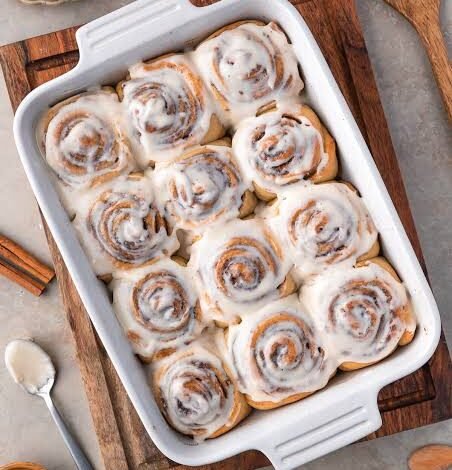
Many home bakers know the feeling of pouring perfectly good sourdough discard right down the sink during weekly feedings. It feels like such a huge waste of time, flour, and energy to throw away something that holds so much natural flavor. That is exactly why discard cinnamon rolls have taken over home kitchens everywhere in recent years. This recipe is all about giving your leftover sourdough starter a delicious second life by turning it into the softest, fluffiest, most fragrant cinnamon rolls you will ever bake. Instead of letting your extra starter go to waste, you mix it into a rich dough filled with warm butter, brown sugar, and aromatic spices. The subtle tang from the starter balances out the heavy sweetness of the cinnamon filling and silky cream cheese glaze in a way that regular store bought rolls simply cannot match. You end up with a breakfast treat that looks like it came straight from a professional bakery showcase while knowing you made it entirely from scratch in your own kitchen.
People fall completely in love with these rolls from the very first bite because they offer an unbelievable texture and depth of flavor. Standard yeast cinnamon rolls can sometimes turn out overly sweet, dry, or heavy on the stomach, but the natural fermentation elements from the sourdough discard help create a remarkably soft crumb that stays tender for days. The aroma that fills your home while these rolls bake is pure comfort, carrying notes of roasted cinnamon, caramelized brown sugar, melted butter, and sweet vanilla. Families love gathered around the breakfast table waiting for the skillet or pan to cool just enough so they can pull apart the warm spiral layers. Kids adore the gooey sweet centers, while adults appreciate the subtle complexity that the sourdough discard brings to the overall profile. It is the kind of heartwarming recipe that turns an ordinary weekend morning into an unforgettable family tradition that everyone looks forward to week after week.
There are so many great reasons to bake a pan of these cinnamon rolls, whether you are celebrating a special occasion or simply trying to live a more mindful lifestyle. From a practical standpoint, making this recipe helps you practice zero waste baking, ensuring that every spoonful of flour you purchase is put to good use. From an emotional perspective, baking these rolls acts as a wonderful stress reliever on quiet weekend mornings when you want to take your time in the kitchen and enjoy the tactile process of kneading and rolling dough. They are perfect for holiday breakfasts like Christmas morning, Easter brunch, or family sleepovers where you need to feed a crowd something deeply satisfying. Fit minded individuals and home cooks who are conscious about digestion also prefer sourdough discard treats, as the fermented flour components can often be much gentler on the gut than quick artificial baking mixes full of preservatives and synthetic chemicals.
If you are new to working with sourdough discard, there is absolutely no need to feel intimidated by this recipe. You do not have to worry about complex feeding schedules or waiting twelve hours for a delicate natural rise because active instant yeast does the heavy lifting to make the dough expand reliably. The sourdough discard is included primarily for incredible flavor, moistness, and tenderness rather than primary leavening power. This means you get the best of both worlds, enjoying the legendary taste of traditional sourdough while keeping the preparation time short, manageable, and completely stress free. Whether you have a whole jar of extra discard sitting in your refrigerator right now or you are just looking for a new baking project to master, these sweet spirals will quickly become your absolute favorite way to treat yourself and your loved ones.
Ingredients You Will Need
To make these rich and fluffy discard cinnamon rolls, gather the following simple ingredients. Everything is split into three easy parts: the soft dough, the sweet cinnamon filling, and the smooth cream cheese icing.
For the Soft Dough
-
1 cup sourdough discard (unfed, at room temperature)
-
3 and 1/2 cups all purpose flour or unbleached bread flour
-
1 packet (2 and 1/4 teaspoons) active dry yeast or instant yeast
-
3/4 cup warm whole milk (around 105 degrees Fahrenheit)
-
1/3 cup unsalted butter (melted and slightly cooled)
-
1/3 cup granulated white sugar
-
1 large egg (at room temperature)
-
1 teaspoon fine sea salt
-
1 teaspoon vanilla extract
For the Cinnamon Filling
-
1/2 cup unsalted butter (very soft, room temperature)
-
1 cup light brown sugar or dark brown sugar (packed)
-
2 tablespoons ground cinnamon
-
1 tablespoon cornstarch (helps keep the filling from leaking out)
-
1/4 teaspoon ground nutmeg (optional, for extra warmth)
For the Cream Cheese Icing
-
4 ounces cream cheese (softened to room temperature)
-
1/4 cup unsalted butter (softened to room temperature)
-
1 and 1/2 cups powdered sugar (sifted)
-
1 teaspoon pure vanilla extract
-
2 tablespoons whole milk or heavy cream (add more if needed for smoothness)
Step by Step Method
Follow these easy steps to craft your fresh batch of cinnamon rolls from scratch.
Step 1: Proof the Yeast
In a large mixing bowl or the bowl of your stand mixer, combine the warm whole milk, one tablespoon of the granulated white sugar, and the active dry yeast. Stir gently with a spoon and let the mixture sit undisturbed for about 5 to 10 minutes. When the yeast is ready, it will look frothy, bubbly, and smell slightly like fresh bread. If it does not foam up, your milk might have been too hot or your yeast might be old, so it is best to start over with fresh yeast.
Step 2: Mix the Wet Dough Base
Add the remaining granulated sugar, melted butter, room temperature egg, vanilla extract, and your sourdough discard into the bowl with the bloomed yeast. Use a whisk or wooden spoon to stir everything together until the liquid is smooth and fully combined. The sourdough discard will blend easily into the warm wet ingredients.
Step 3: Add Flour and Knead
Add the fine sea salt and half of the flour into the liquid mixture. Stir well with a heavy wooden spoon or use the paddle attachment on your stand mixer set to low speed. Gradually add the rest of the flour half a cup at a time until a soft dough begins to form and pull away from the sides of the bowl. Switch to the dough hook attachment or turn the dough onto a lightly floured clean kitchen surface. Knead the dough gently for 8 to 10 minutes until it becomes smooth, stretchy, and soft to the touch. If the dough feels overly sticky, add one tablespoon of flour at a time, but try to keep the dough as soft as possible so your baked rolls turn out light and tender.
Step 4: First Dough Rise
Lightly oil a large clean bowl with a little bit of neutral oil or melted butter. Transfer your kneaded dough ball into the oiled bowl, turning it over once so the entire top surface is coated in a thin layer of oil. Cover the bowl tightly with a clean kitchen towel or plastic wrap. Place the bowl in a warm, draft free spot in your kitchen for about 1 to 1.5 hours, or until the dough has doubled in size.
Step 5: Prepare the Cinnamon Filling
While your dough is expanding, prepare the sweet filling. In a medium mixing bowl, combine the packed brown sugar, ground cinnamon, cornstarch, and ground nutmeg. Stir the dry filling ingredients together until there are no sugar lumps left. Keep your half cup of softened butter ready in a separate small dish.
Step 6: Roll Out the Dough
Once your dough has doubled in size, gently press your fist into the center to deflate the excess air bubbles. Dust your kitchen counter lightly with flour and tip the dough onto the work surface. Use a rolling pin to flatten and shape the dough into a large rectangle, roughly 12 inches wide by 18 inches long. Try to make the thickness as even as possible so all your rolls bake at the same rate.
Step 7: Spread Filling and Roll Up
Use a spatula or clean hands to spread the softened butter evenly across the entire surface of the rolled dough rectangle, leaving a small half inch border clean along the top edge. Sprinkle the brown sugar and cinnamon mix evenly over the buttered dough. Gently press the sugar mixture into the butter with your palms so it sticks nicely. Starting from the long edge nearest to you, roll the dough tightly upward into a neat log. Pinch the clean top seam gently to seal the roll shut.
Step 8: Slice into Spirals
Line a 9×13 inch baking dish or a large round cast iron skillet with parchment paper, or grease it thoroughly with butter. To cut clean rolls without squishing them, use a piece of unflavored dental floss or clean sewing thread. Slide the thread under the log, cross the two ends over the top of the log, and pull tightly to slice straight through the dough. Cut the log into 12 equal rolls. Arrange the rolls cut side up in your prepared baking dish, leaving a tiny bit of space between each one.
Step 9: Second Rise
Cover the baking dish loosely with a clean towel and let the shaped rolls rise in a warm spot for about 30 to 45 minutes. They should puff up, fill out the empty spaces in the pan, and touch each other gently. While they are completing this second rise, preheat your oven to 350 degrees Fahrenheit (175 degrees Celsius).
Step 10: Bake to Golden Perfection
Place the uncovered baking dish on the center rack of your preheated oven. Bake for 22 to 27 minutes, or until the tops are light golden brown and the centers are cooked through. If you notice the tops browning too quickly around the 15 minute mark, cover the pan loosely with a sheet of aluminum foil for the remaining time.
Step 11: Whip the Cream Cheese Icing
While your cinnamon rolls are baking, make the frosting. In a mixing bowl, beat the softened cream cheese and soft butter together using a hand mixer or stand mixer until smooth and fluffy. Add the sifted powdered sugar, vanilla extract, and milk. Beat on low speed until combined, then increase to medium speed for 1 to 2 minutes until the icing is creamy and lump free.
Step 12: Frost and Serve
Remove the fresh cinnamon rolls from the oven and set the pan on a heatproof wire cooling rack. Let them cool for about 10 minutes so they are warm but not piping hot. Spread half of the cream cheese icing over the warm rolls right away so it melts slightly into the crevices. Spread the remaining icing over the top after another 5 minutes. Serve warm and enjoy every single gooey layer.
Why This Recipe Is Special
This discard cinnamon roll recipe stands out from ordinary baking guides for several incredible reasons that benefit both your kitchen routine and your body. First and foremost is the unmatched flavor profile created by sourdough fermentation. The wild yeasts and beneficial lactic acids present in the sourdough discard break down starches in the flour over time, creating rich, complex flavor notes that balance out the sweetness of the sugar filling. This prevents the finished treat from tasting sickly sweet, allowing you to enjoy a mature, rich flavor that feels far superior to standard fast rise doughs.
From a health and wellness perspective, incorporating sourdough discard into your baked goods can be remarkably helpful for digestion. Even though this recipe uses instant yeast to speed up the rising process, the sourdough starter component has already spent days or weeks fermenting flour. This fermentation process helps weaken phytic acid and partially breaks down gluten structures in that portion of the dough. As a result, many people who experience bloating or discomfort after eating standard commercial white bread find that sourdough discard rolls are far gentler on their stomach and much easier to digest.
Another major benefit of this recipe is its zero waste factor. Living a more sustainable lifestyle starts right in the home kitchen. Every time you feed a traditional sourdough culture, a significant portion of flour gets set aside. By turning that discarded portion into cinnamon rolls, you eliminate food waste entirely while saving money on your grocery bill. You are essentially taking something that would have been thrown into the trash and turning it into a luxurious homemade breakfast spread that can easily feed your whole family or a group of happy guests.
Lastly, the physical texture achieved by combining butter, egg, and sourdough discard is truly extraordinary. The natural acids in the discard react with the dough structure to lock in moisture, creating a pillowy crumb that does not dry out quickly. Standard homemade cinnamon rolls often become hard or stale within twelve hours of baking, but these discard rolls remain remarkably soft, moist, and delicious even on the second or third day when stored properly.
Extra Tips for Better Taste
-
Pour warm heavy cream over the rolls right before baking. For the ultimate bakery level secret, warm up 1/3 cup of heavy cream and pour it evenly over and between the risen rolls just before putting the pan into the oven. The rolls will absorb the cream as they bake, creating an amazingly gooey bottom layer and an ultra soft middle section.
-
Use fresh high quality ground cinnamon. The quality of your spices directly impacts the final flavor. Choose vibrant, aromatic cinnamon like Saigon cinnamon or Ceylon cinnamon for the strongest, warmest aroma.
-
Do not over flour your working space. When rolling out the dough, use only as much flour as necessary to prevent sticking. Too much extra flour rolled into the dough can make the finished cinnamon rolls dry and tough instead of light and fluffy.
-
Use room temperature ingredients. Ensure your egg, sourdough discard, and milk are not freezing cold from the fridge when you start mixing the dough. Warm or room temperature ingredients blend together more smoothly and create a better environment for the yeast to grow.
-
Brown the butter for the filling. If you want an extra layer of nutty warmth, melt and lightly brown the butter for the cinnamon sugar filling in a small saucepan before spreading it over your dough rectangle. Let it cool slightly so it does not melt the dough, then assemble as usual.
-
Freeze before baking for easy morning prep. If you want fresh rolls on a busy morning, cut the rolls and place them in your pan, then cover tightly and put them straight into the freezer. The night before you want to bake them, move the pan into your refrigerator to thaw overnight, then let them rise in a warm kitchen for 45 minutes before baking as directed.
-
Add extra citrus zing. For a refreshing twist that cuts through the rich cream cheese, grate a teaspoon of fresh orange zest or lemon zest into your brown sugar cinnamon filling mixture. The subtle citrus fragrance pairs incredibly well with the natural tang of the sourdough discard.
Final Thoughts
Baking these discard cinnamon rolls is one of the most rewarding culinary projects you can undertake in your home kitchen. It bridges the gap between traditional sourdough craftsmanship and quick, satisfying comforting sweet bakes. You get to enjoy the incredible tactile feeling of kneading fresh dough, filling your house with the heavenly scent of spices, and serving your family a treat made with love and zero waste. Every bite of these soft, spiral treats reminds us that simple, wholesome ingredients handled with care will always beat store bought alternatives. Grab your jar of sourdough discard, warm up your milk, and get ready to experience the softest, most delicious cinnamon rolls you have ever made.
Nutrition Details
Here is the estimated nutritional breakdown for one freshly baked cinnamon roll with cream cheese frosting, based on a yield of 12 rolls per batch.
Nutrition Table Per Serving
Disclaimer
Please note that this recipe and nutritional guide are provided strictly for general informational and educational purposes. Everyone’s individual body, metabolic rate, daily caloric need, and digestive system are completely unique, which means exact health effects, nutrition metrics, and digestion results can vary from person to person. The nutritional values listed above are estimations calculated using standard ingredient databases and may shift depending on the specific brands, ingredient swaps, or portion sizes you use in your kitchen. If you have underlying health concerns, severe gluten sensitivities, celiac disease, diabetes, or specific dietary restrictions, please consult with a qualified healthcare professional or certified dietitian before introducing new foods into your routine.



One Comment