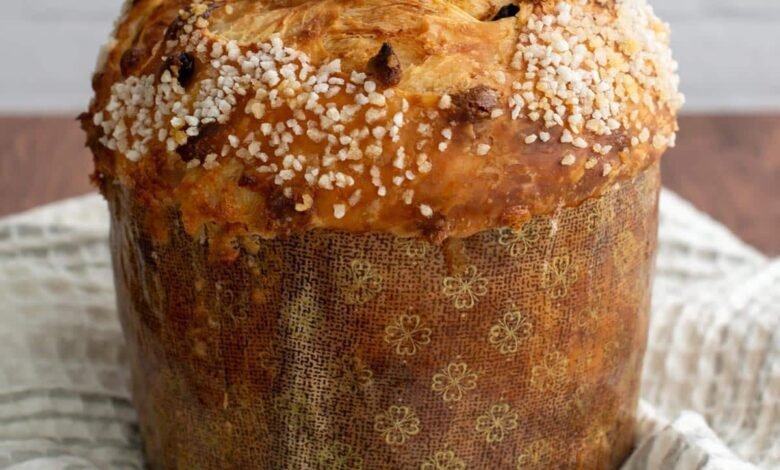
Sourdough discard panettone is a wonderful homemade sweet bread that brings traditional Italian holiday baking right into your home kitchen using leftover sourdough starter. Many people who bake sourdough bread often end up with extra starter that they do not want to throw away, and this recipe gives that leftover discard a delicious new life. Traditional panettone is famous for being a rich, fluffy, and aromatic bread filled with sweet candied fruits and juicy raisins, usually enjoyed during festive seasons like Christmas and New Year celebrations. By incorporating sourdough discard into the dough, you get a unique depth of flavor that perfectly balances the sweetness of the fruit and sugar with a gentle, tangy richness. This recipe turns basic baking staples like flour, eggs, butter, and sugar into an impressive centerpiece that looks like it came straight from a bakery in Milan. Baking this bread allows you to master a classic technique while practicing zero waste in your kitchen, making it both a smart and rewarding culinary project. Beginners will find this approach much more approachable than complex traditional methods, yet the final result remains light, soft, and amazingly flavorful. It is a warm, inviting bake that fills your whole house with the comforting scents of vanilla, citrus, and toasted butter.
People absolutely love this recipe because it combines the nostalgic, luxury experience of classic holiday panettone with the practical satisfaction of reducing food waste in the kitchen. Sourdough discard adds an amazing texture and a subtle complex note that elevates simple ingredients to a whole new level without requiring you to wait days for a wild starter to build maximum yeast power. The rich combination of real butter, whole eggs, and sweet dried fruits creates a silky crumb structure that stretches in soft, delicate ribbons when you pull it apart. Food lovers appreciate how the natural acidity of the sourdough discard keeps the bread soft and fresh for several days longer than standard yeast cakes or quick breads. Every single slice brings a joyful mixture of textures, from the tender crumb to the chewy candied orange peel and sweet raisins scattered throughout the bread. It is also a very visual and satisfying baking process, giving you a majestic, tall loaf with a gorgeous golden brown crown that always impresses family and friends. When you present a golden loaf of homemade panettone at the breakfast table, people immediately feel cared for because they know time, love, and passion went into baking it.
You should make this sourdough discard panettone whenever you want to create unforgettable memories around the dining table during cozy weekends, festive holidays, or special family gatherings. Food is deeply tied to human emotion, and baking a high rising, fragrant loaf of sweet bread creates an atmosphere of warm comfort and joy that brings people together. From a taste perspective, there is simply no comparison between a fresh homemade panettone and a store bought package that has sat on a market shelf for months. The vibrant zest of fresh oranges and lemons combined with real vanilla extract creates an incredible fragrance that makes your home feel instantly welcoming and festive. From a fitness and mindful eating viewpoint, making your own panettone gives you complete control over every single ingredient that goes into your body. You can completely avoid artificial preservatives, fake flavorings, standard commercial additives, and low quality processed fats often found in factory made holiday cakes. By using whole eggs, quality butter, natural sourdough discard, and unbleached flour, you create a wholesome treat that nourishes both your spirit and your body in a balanced way.
Starting this baking journey is also a wonderful way to build your personal confidence in the kitchen while mastering the art of handling rich, enriched yeast doughs. Many home bakers feel intimidated by panettone because standard recipes require endless steps, extreme patience, and complex multi day fermentation schedules that can easily feel overwhelming. This simplified sourdough discard version removes the high stress while retaining all the classic flavors, charming beauty, and incredible soft textures you expect from authentic panettone. It is the perfect weekend project when you want to slow down, disconnect from busy digital screens, and engage in a relaxing, tactile craft that rewards you with an edible masterpiece. Whether you are baking a special gift for a dear neighbor, planning a cozy Sunday morning brunch with coffee, or simply using up your collection of sourdough discard, this recipe delivers consistent happiness. The feeling of pulling a towering, golden loaf out of your oven and smelling the rich buttery aroma is an exceptionally satisfying experience every single home baker deserves to enjoy. With easy guidance, straightforward steps, and simple household ingredients, you will easily create a majestic loaf that brings smiles to everyone around you.
Ingredients You Will Need
Here is the complete list of everything you need to create this amazing sweet bread. All measurements are given in precise quantities so your bake turns out perfectly every single time.
-
Unbleached All Purpose Flour or Bread Flour: 500 grams (about 4 cups)
-
Sourdough Discard (unfed, at room temperature): 150 grams (about 0.67 cup)
-
Instant Yeast: 7 grams (1 standard packet or 2.25 teaspoons)
-
Whole Milk (lukewarm, about 105 degrees Fahrenheit): 180 milliliters (0.75 cup)
-
Granulated White Sugar: 100 grams (0.5 cup)
-
Unsalted Butter (softened at room temperature): 120 grams (0.5 cup plus 1 tablespoon)
-
Large Egg Yolks (at room temperature): 4 large egg yolks
-
Large Whole Egg (at room temperature): 1 large egg
-
Pure Vanilla Extract: 10 milliliters (2 teaspoons)
-
Fresh Orange Zest: 10 grams (grated zest from 1 large organic orange)
-
Fresh Lemon Zest: 5 grams (grated zest from 1 medium organic lemon)
-
Fine Sea Salt: 6 grams (1 teaspoon)
-
Raisins or Sultanas: 100 grams (0.67 cup)
-
Candied Orange Peel (diced small): 75 grams (0.5 cup)
-
Dried Cranberries or Dried Currants: 50 grams (0.33 cup)
-
Warm Water or Dark Rum for soaking dried fruit: 60 milliliters (0.25 cup)
-
Extra Butter for topping before baking: 15 grams (1 tablespoon)
Step by Step Method
Step 1: Preparing the Fruit Soak
Place your raisins, candied orange peel, and dried cranberries into a small bowl. Pour warm water or warm dark rum over the fruit until everything is lightly covered. Let the fruit sit for at least thirty minutes so it becomes soft, plump, and juicy. Soaking prevents the dry fruit from absorbing moisture from your bread dough later. After soaking, drain any excess liquid thoroughly and pat the fruits dry with a clean paper towel. Set the bowl aside.
Step 2: Activating the Yeast and Sourdough Mixture
In a large mixing bowl or the bowl of a stand mixer, pour in the lukewarm milk. Sprinkle the instant yeast and one tablespoon of the granulated sugar over the warm milk. Stir gently and let it sit for five to ten minutes until it turns frothy and bubbly. Add your room temperature sourdough discard into this warm liquid mixture and whisk gently until the discard dissolves into a smooth liquid base.
Step 3: Combining Eggs, Aromatics, and Sugar
To the liquid mixture, add the remaining granulated sugar, four large egg yolks, one whole egg, pure vanilla extract, fresh orange zest, and fresh lemon zest. Whisk everything together until the mixture turns a bright yellow color and the sugar begins to dissolve. The combination of citrus zest and vanilla will create an incredible perfume that defines authentic panettone flavor.
Step 4: Mixing the Flour and Forming the Dough
Add the unbleached flour and fine sea salt into the wet ingredients. If you are using a stand mixer, attach the dough hook and mix on low speed for about three minutes until a shaggy dough forms and no dry flour remains. If you are mixing by hand, use a sturdy wooden spoon to combine the ingredients into a rough dough ball. Cover the bowl with a clean towel and let it rest for ten minutes. This short rest allows the flour to absorb the liquids evenly.
Step 5: Incorporating the Softened Butter
Turn your mixer to medium low speed, or prepare to knead by hand. Gradually add the softened unsalted butter one small tablespoon at a time. Make sure each piece of butter is fully absorbed into the dough before adding the next piece. This step requires patience because the dough will look slippery at first, but keep mixing. Continue kneading for ten to twelve minutes until the dough becomes smooth, glossy, elastic, and pulls away cleanly from the sides of the bowl.
Step 6: Folding in the Soaked Dried Fruits
Scatter the drained soaked fruits evenly over the smooth dough. Knead gently on low speed or by hand for two to three minutes until all the fruit is evenly distributed throughout the dough. Be gentle during this step so you do not crush the soft pieces of fruit.
Step 7: First Rise Fermentation
Lightly oil a large bowl with a little vegetable oil or butter. Shape your finished dough into a round ball and place it into the oiled bowl. Cover the bowl tightly with plastic wrap or a damp kitchen towel. Place the bowl in a warm, draft free spot in your kitchen for two to three hours, or until the dough has doubled in size. Sourdough discard adds rich flavor, while the instant yeast helps the rich dough rise predictably.
Step 8: Shaping and Second Rise in the Panettone Mold
Gently tip the risen dough onto a clean, lightly oiled work surface. Do not use extra flour because flour can dry out the dough. Gently press the dough to release large gas bubbles, then fold the edges inward to form a tight, smooth round ball. Place the dough ball seam side down into a classic paper panettone mold that is six inches wide and four inches tall. Cover the mold loosely with a light towel and let it rise in a warm place for about two to three hours, until the top of the dough rises just above the rim of the paper mold.
Step 9: Scoring and Adding Final Butter Top
Preheat your oven to 350 degrees Fahrenheit (175 degrees Celsius). Using a very sharp knife or a clean razor blade, carefully cut a shallow cross shape across the top surface of the loaf. Place one small tablespoon of cold butter right in the center of the cut cross. This classic step helps the top expand smoothly while creating a rich, glossy golden crust.
Step 10: Baking to Golden Perfection
Place the paper mold onto a sturdy baking sheet and slide it onto the middle rack of your preheated oven. Bake for thirty five to forty five minutes. If the top of the bread turns deep brown too quickly after twenty minutes, loosely tent a piece of aluminum foil over the top to prevent burning. The panettone is completely done when an instant read thermometer inserted into the center reaches 190 degrees Fahrenheit (88 degrees Celsius).
Step 11: Cooling and Serving Your Masterpiece
Remove the panettone from the oven. To keep the delicate structure from collapsing as it cools, you can insert two long metal skewers through the bottom of the paper mold and suspend the loaf upside down between two large pots or heavy books for two hours. If you do not have skewers, simply let it cool upright on a wire cooling rack until completely cool. Slice with a serrated bread knife and enjoy your wonderful homemade bake!
Why This Recipe Is Special
This sourdough discard panettone recipe holds a special place in home baking because it solves common baking challenges while producing bakery quality results. Standard homemade panettone can sometimes turn out dry, dense, or overly sweet, but this balanced formula creates a pillowy, moist texture that lasts for days. Here are the main reasons why this recipe is truly remarkable:
-
Zero Waste Kitchen Efficiency: Every home sourdough baker knows the guilt of throwing away excess discard during weekly feedings. Using sourdough discard in rich, enriched doughs like panettone gives that discard a noble purpose. You turn flour and water that would otherwise be wasted into a luxurious gourmet treat.
-
Enhanced Digestion and Health Benefits: During the fermentation process, wild yeasts and beneficial bacteria partially break down gluten proteins and carbohydrates in the flour. This process makes the finished bread much easier to digest compared to standard quick breads made purely with commercial yeast. People who sometimes feel heavy or bloated after eating rich baked goods often find sourdough enriched breads much gentler on their stomachs.
-
Unmatched Flavor Depth: Sourdough discard provides subtle organic acids that interact with the rich fat from egg yolks and butter. This produces a complex, balanced flavor profile with delicate fruity, buttery, and slightly tangy notes that simple yeast recipes cannot match.
-
Longer Shelf Life and Softness: Sourdough acidity acts as a natural preservative that slows down the staling process. While regular homemade cakes dry out within forty eight hours, this panettone remains remarkably soft and fresh for up to five days when stored properly in an airtight bag at room temperature.
-
Beginner Friendly Reliability: Traditional authentic panettone requires three days of precise temperature control and natural levain maintenance. This recipe combines the fast, reliable rise of instant yeast with the deep flavor benefits of sourdough discard, giving you guaranteed success without stress.
Extra Tips for Better Taste
-
Use High Quality Butter and Fresh Eggs: Since enriched sweet bread relies heavily on fat for flavor and softness, always choose a high quality butter with high butterfat content. Fresh farm eggs with bright orange yolks will give your panettone that signature golden internal color and rich taste naturally.
-
Enrich the Fruit Soak with Flavor Boosters: Do not soak your dried fruits in plain water if you want extra luxury. Soak your raisins and orange peel in warm orange juice, spiced tea, or dark rum overnight. Adding a splash of orange blossom water or a small drop of almond extract into the fruit soak creates an unforgettable aromatic profile.
-
Master the Windowpane Test: Before adding your soaked dried fruits to the dough, make sure your gluten network is fully developed. Take a small pinch of dough and gently stretch it between your fingers. If you can stretch it into a thin, translucent membrane without it tearing, your gluten is perfectly developed, ensuring a light, fluffy panettone.
-
Control Your Kitchen Temperature: Enriched doughs containing lots of butter and sugar rise slower than plain bread doughs. Keep your bowl in a warm spot, ideally around 75 to 80 degrees Fahrenheit. A turned off oven with the interior light turned on creates an ideal cozy proofing chamber during cold winter months.
-
Creative Flavor Variations: Feel free to customize the mix ins according to your preference. If you do not like candied fruits, replace them with high quality dark chocolate chips, chopped toasted hazelnuts, or dried sweet cherries soaked in vanilla syrup. A chocolate and orange zest combination is exceptionally delicious for chocolate lovers.
Final Thoughts
Baking your own sourdough discard panettone is a truly rewarding experience that fills your kitchen with warmth, amazing aromas, and genuine baking satisfaction. It takes a humble ingredient like leftover starter discard and elevates it into an impressive, beautiful loaf that brings real happiness to your family and guests. Do not worry if your first loaf is not completely perfect in shape, because the incredible taste, soft crumb, and rich buttery flavor will delight everyone who takes a slice. Share this bake with loved ones during breakfast with a cup of warm coffee or hot cocoa, and enjoy the cozy moments that homemade food naturally creates. Happy baking, and may your kitchen always be filled with love and delicious scents!
Nutrition Details
Here is the approximate nutritional breakdown for this recipe. The values are calculated for both individual servings (12 equal slices per loaf) and the entire recipe.
| Nutrient Component | Per Serving Amount (1 Slice) | Percent Daily Value |
| Calories | 285 kcal | 14% |
| Total Fat | 11 grams | 14% |
| Saturated Fat | 6 grams | 30% |
| Trans Fat | 0 grams | 0% |
| Cholesterol | 75 milligrams | 25% |
| Sodium | 140 milligrams | 6% |
| Total Carbohydrates | 40 grams | 15% |
| Dietary Fiber | 2 grams | 7% |
| Total Sugars | 16 grams | 32% |
| Added Sugars | 10 grams | 20% |
| Protein | 6 grams | 12% |
| Calcium | 35 milligrams | 3% |
| Iron | 2.2 milligrams | 12% |
| Potassium | 120 milligrams | 3% |
Whole Recipe Summary (Entire Loaf):
-
Total Recipe Calories: 3420 kcal
-
Total Recipe Fat: 132 grams
-
Total Recipe Carbohydrates: 480 grams
-
Total Recipe Protein: 72 grams
Disclaimer
The nutritional information and health benefits provided in this article are for general educational purposes only. Every individual body responds differently to foods, dietary fiber, and sourdough fermentation. Ingredients, calorie counts, and nutrient profiles can change depending on the specific products, brands, and portion sizes you use in your kitchen. If you have specific dietary restrictions, gluten sensitivities, or medical conditions, please consult a qualified healthcare professional or a registered dietitian before making significant changes to your diet.